1913 In Review

It was in 1913 that the name of Australia’s capital city was launched. Our first postage stamp with a kangaroo inside a map of Australia appeared, as did the first Commonwealth banknote the ten shilling note which, in that year, was considered a good week’s wage.
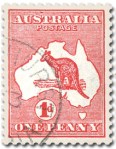
1d original-stamps

In Melbourne, with its population of 651,000, it was ‘the year of the dome’, with the opening of the domed reading room at The State Library of Victoria. For the first time, lost dogs had a home in North Melbourne, The Eye and Ear Hospital was completed, and the demolition company of ‘Whelan the Wrecker’ was starting to make its mark upon Melbourne’s skyline. Daniel Mannix, who was to become Melbourne’s Roman Catholic Archbishop for 46 years, arrived in Australia, and half a million people came to visit Luna Park in its first year of operation……..”just for fun”.

Sorrento in 1913 seemed to offer more subdued pieces of news than in the previous year, which contained a drowning, a shipwreck, a hotel fire, misplaced vice-regal property and a conflict of local judicial interests.

Continue reading

Sorrento Museum Schools’ Competition

Another Time Another Life

Competition coordinator Bergliot Dallas and the volunteers at Nepean Historical Society are thrilled that over 300 students entered the Museum’s history competition. All local students and schools were invited 12 months ago to be involved. The theme ‘Another Time Another Life’ enabled students to select any person, place or period of local history. They could choose their format – digital, multi- media, photographic or written. The only disappointment was that no secondary students entered this year.

Presentation Day

Presentation Day

Continue reading

Carey Grammar Year 7s Visit

September 2013

Carey Year 7 students spend 2 days at school investigating the Mornington Peninsula.

This is an interdisciplinary study, but the big idea is sustainability and students understand the ownership of the land by the Boonwurrung Balluk clan and developing history of the area and the impact made by humans both positive and negative.

They develop an understanding of the appeal of this area with its wide variety of tourist attractions, but also develop a deep understanding of the geography of the area – climate, erosion, formation of Port Phillip Bay and life in the sea.

We spend 2 days visiting various sites, but the highlight of the visit is the 2 hours spent at the Sorrento Museum learning in-depth about the history of the area – beginning with George Coppin’s vision for Sorrento, the amazing railway to shuttle the thousands who arrived on paddle steamers for their holidays. Students learn about the Collins Settlement and its failure due to the lack of water.

Bergliot Dallas talks at the Sorrento Museum

Bergliot Dallas talks to students at the Sorrento Museum

This is just a taste of the wonderful information presented by passionate speakers. This is what engages the students and they all want to know more. They love to hear the stories – not just the facts – given by informed local people who have a love of the area and their special area of interest.

A highlight for me and all students is Watts’ Cottage. How did these people survive the conditions in the past when our lives are so, so comfortable. So many artefacts, to highlight this lifestyle. Fascinating

A visit to the Sorrento Historical Museum will always be the number one priority for our visit to study this area with an environmental focus.

The staff are flexible and will even combine a morning bus tour of the significant things in this area.

I can only recommend this as a most valuable and special learning experience.

Bev Steer, Middle School Teacher

Monthly Meeting October 4th 2013

Speaker: John Grinpukel, Heritage Planner, Parks Victoria

Topic: ‘Heritage & Planning at Point Nepean National Park’

Pt Nepean

Over 40 people attended this talk by heritage planner John Grinpukel. John is a Conservation Architect who has worked at the National Trust, MMBW Parks and Waterways and Parks Victoria in the heritage conservation field. Since mid – 2009 he has been seconded to Point Nepean National Park as heritage planner following the transfer of the Quarantine Station to the State.

Continue reading