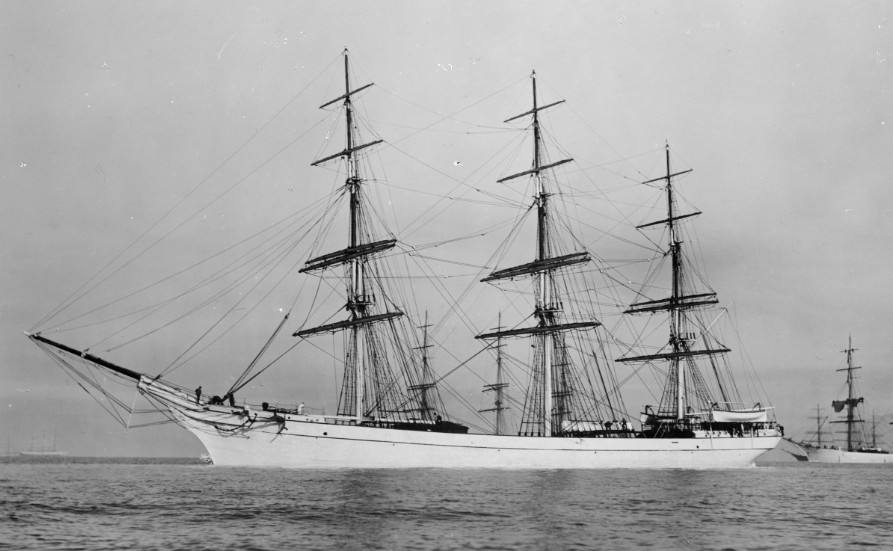
The Sierra Nevada was a three-masted, iron ship of 1,523 tons, built in 1877, by Oswald, Mordaunt & Co., Southampton, U.K., on a length of 233.0 feet, a breadth of 37.6 feet and a depth of 23.5 feet.
The vessel was owned by the Sierra Shipping Co. and registered in Liverpool.
The vessel left Liverpool bound for Melbourne on the 16 January 1900, with a cargo of 10,000 slates, 2,000 cases of bottled beer, 600 packages of whisky, 3,500 sacks of salt, 33 crates of sanitary ware, 25 casks & 175 drums of sheep dip, 350 cases of beer, 40 kegs of disinfectant, 75 packages of earthenware, machinery, softgoods, printing paper, bar, sheet and hoop iron, tin plates, hollow ware, fancy goods, wire and sundry general cargo, with a crew of 27 under the command of Captain John Scott.
After a routine voyage of 113 days, the Sierra Nevada arrived off Port Phillip Heads at 6 p.m. on the 8 May, and during the night the wind veered around to the south and freshened. A good description of what happened next was published in the Argus 10 May 1900:
The first mate (Mr Crowley) was in charge. When it was discovered that the vessel had worked too close in on a lee shore, the captain was summoned, and all hands were called on deck, and every effort was made to work the vessel off. Three times they wore ship, but still the terrible line of surf lay close on the lee, and a tumultuous sea was all the time beating her in. A flare light was burned to summon the pilot. The port anchor was let go, the vessel swung round, and immediately struck with her stern on a rock.
The vessel’s hull continually pounded the rocks, as huge breakers began to sweep the decks clean, with the crew battling for their lives and trying to gain shelter wherever it could be found. The captain ordered the lifeboats to be launched immediately to save life, the port lifeboat being the first lowered with 14 crew scrambling into it, only to be immediately overwhelmed by heavy breakers, until only four seamen remained in the swamped lifeboat when it was finally cut away. By some miracle this waterlogged boat managed to evade all hazards and washed through a gap in the reef, where it washed ashore on a sandy beach. One other seaman named Griffiths, who had been washed out of this lifeboat managed to swim ashore and was found bruised and battered on the rocks nearby.
A second lifeboat which followed, was immediately smashed to pieces beneath the feet of the crew who were attempting to launch it from the doomed Sierra Nevada, unfortunately none of the crew in the second boat survived. Delahunty one of the five survivors who reached shore volunteered to go for help and walked to Portsea to raise the alarm. Help soon arrived and all five seamen were taken to the Portsea Barracks and the Quarantine Station to be cared for by the army. Help of a different kind also arrived, in the form of locals wishing to plunder and remove anything of value from the wreckage, constantly being piled up on the beach abreast of the wrecksite.
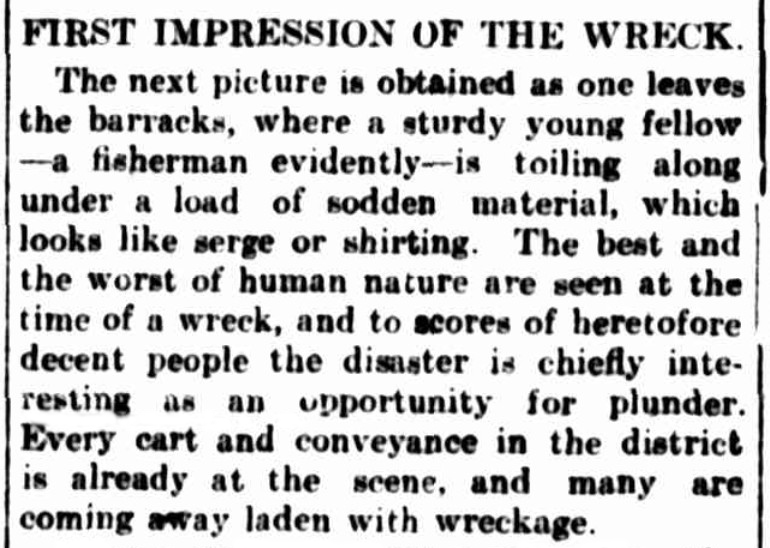
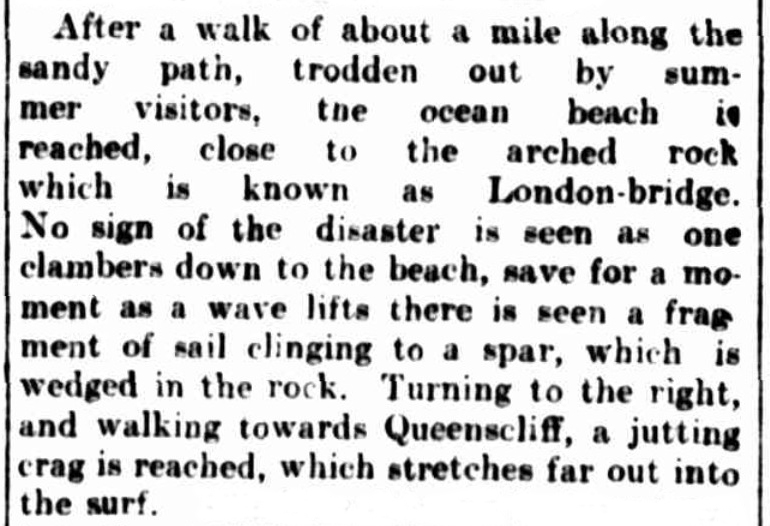
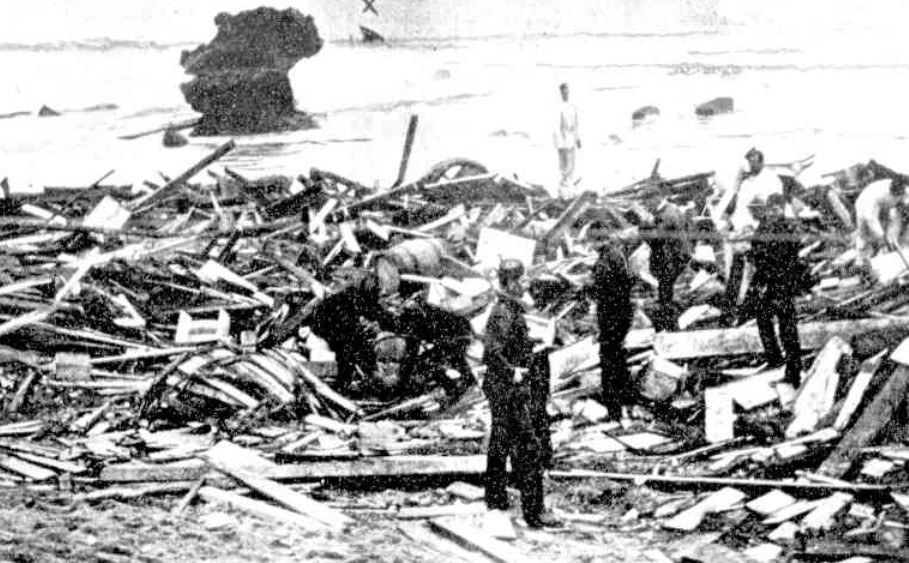
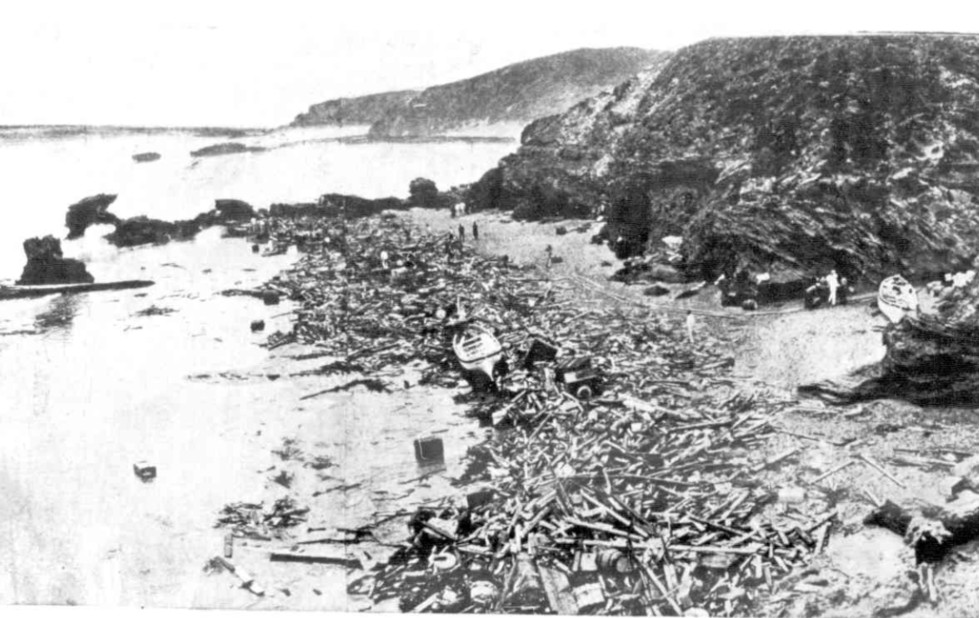
By the next day the men of the Victorian Royal Australian Artillery from Portsea and Queenscliff, under the command of Lieutenant-Colonel Stanley arrived to seal off the area from the pilferer’s and keep the sightseers at a distance This allowed the dignified removal of the bodies of the seamen to be undertaken and salvage work to begin. The Artillerymen began removing the more valuable cargo, in the form of bottled and barrelled spirits and by the time Captain Wymark, the marine surveyor had arrived on the scene with a gang of stevedores, no fewer than 680 cases of whisky and 300 casks of whisky had been secured. In fact it was reported that the majority of the spirits was successfully salvaged, as it had washed ashore in a more intact condition, than most of the other more easily damaged cargo.
Once more controversy raged in the press of the day over who was to blame, and the Port Phillip Pilot Service came in for much harsh criticism. Eventually after the completion of a Court of Marine Inquiry, blame was attributed to those in charge of the Sierra Nevada, who were found to have caused the disaster through imprudent navigation.
Go To Shipwrecks Homepage HERE
 Nepean Historical Society